How to Choose the Right Bollard for Your Project
Choosing a bollard involves more than selecting a style or finish. The right system needs to suit the level of protection, access requirements, site conditions, and day-to-day operation of the space.
Thinking through these factors early can help your project team compare options and make decisions before specifications and installation plans are finalized.
- What level of protection is required?
Start by defining what the bollards need to protect against. Is the goal to guide traffic, protect pedestrians from low-speed vehicle movement, or provide a tested barrier against a vehicle impact?
Different applications call for different systems. For example, ASTM F3016 covers low-speed vehicle impact testing, while ASTM F2656 covers larger vehicle security barrier testing at higher speeds. The standards and ratings are not interchangeable, so it’s important to identify the project’s performance requirements before comparing products.
- Does the area need vehicle access?
Consider who needs to enter the protected area and how often. A fixed bollard may be suitable where vehicle access is not needed. Where access must be controlled, removable, retractable, or automatic bollards may be a better fit.
Think about how the system will work in practice:
- Who is authorized to operate it?
- How frequently will vehicles pass through?
- Is access needed for deliveries, emergency response, or maintenance?
- Is there space to store or operate removable equipment?
- Will drivers have a clear view of the bollards?
Answering these questions helps match the bollard type to the way the site is used.
- What site conditions could affect installation?
The visible bollard is only part of the system. Foundations and underground conditions can affect which options are feasible and how the work should be planned.
Before selecting a product, review available information about underground utilities, pavement or slab construction, soil conditions, drainage, finished grade, and space below the surface. Also consider nearby curbs, walls, doors, drive lanes, and pedestrian routes.
These details can influence foundation depth, installation method, bollard spacing, and access to the finished system. A site review and coordination with the project team can help identify constraints before they create delays in the field.
- Are there architectural or finish requirements?
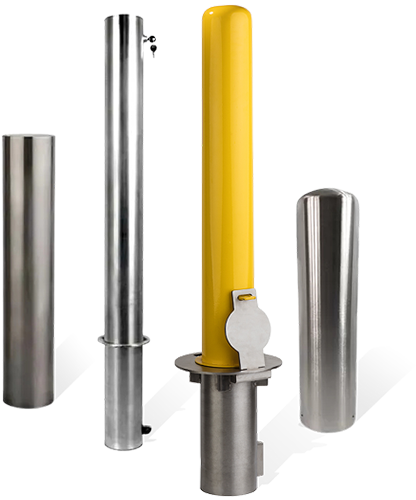
Bollards often sit in prominent areas, so appearance matters. Consider the desired height, diameter, material, cap style, and finish, as well as how the bollards will relate to nearby buildings, paving, signs, and site furnishings.
Options may include stainless steel, painted carbon steel, sleeves or covers, and reflective elements. Appearance should be coordinated with the project design while preserving the system’s required performance.
- Who will operate and maintain the system?
Every bollard system has practical needs after installation. Removable and retractable systems may require regular operation, cleaning, and inspection. Automatic systems may also involve controls, power, and service coordination.
Decide who will be responsible for operating the system and who will handle routine maintenance. Include the owner or facilities team in the discussion, especially when the bollards will be used frequently or form part of an access-control plan.
Make the decision before the specification is finalized
The best bollard choice begins with a clear understanding of the site and its needs. Define the required level of protection, plan for vehicle access, review installation conditions, coordinate appearance, and identify who will operate and maintain the system.
With those questions answered, the project team can evaluate options with greater clarity and move toward a specification that fits the intended use of the space.
Need help comparing bollard options for your project? Contact 1-800-Bollards to discuss your site, access needs, and performance requirements.