How Bollards Reduce Property Owner Liability
How Bollards Reduce Property Owner Liability
A storefront can look calm and safe until a driver misses a turn, mistakes the accelerator for the brake, or loses control in a busy parking area. When vehicles and people share a small space, even a low-speed impact can damage a building, disrupt business, or injure someone nearby.
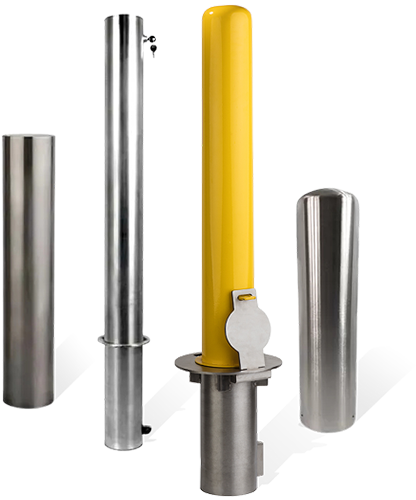
Property owners can’t prevent every accident. They can, however, look carefully at where vehicles travel and where an impact could cause the most harm. Bollards offer a practical way to create separation between those areas—along storefronts, near entrances, around outdoor gathering spaces, or beside equipment that needs protection.
The important question is not simply whether a property has bollards, but whether the protection fits the risk. A row of bollards selected for occasional low-speed impacts may not be appropriate for a site with a higher-speed vehicle threat. For projects that call for tested vehicle protection, choose a system with crash-test results that match the vehicle, speed, and conditions the site needs to address.
That information helps guide a decision, but a test rating is not a promise about every real-world impact. Site conditions, installation details, vehicle type, and impact angle can all affect performance. That’s why a useful plan starts with the property itself: the direction vehicles approach from, the distance between traffic and the building, the people using the space, and the assets most at risk.
Protection also needs to work for the people moving through the property. Bollards should be placed with entrances, accessible routes, parking access aisles, and emergency movement in mind. For public rights-of-way, the U.S. Access Board’s PROWAG addresses bollards as potential obstructions and sets clear-width requirements for pedestrian access routes. The requirements that apply depend on the project and location. www.access-board.gov
After installation, follow the manufacturer’s inspection and maintenance guidance. Keeping the product and installation details on file can help the property team refer back to them when maintenance or site changes are needed.
Bollards provide a strong physical barrier between vehicles and vulnerable areas. When the system and placement are matched to the site’s needs, bollards help protect building entrances, pedestrians, and equipment from vehicle impacts as part of a comprehensive property safety plan.
Planning protection for your property? Talk with The Bollard Experts.
This article is for general information and is not legal advice. Project requirements vary by location and site conditions.